Designing a Real-Time Manufacturing
Intelligence Platform
Context
A unified analytics system to streamline production, align supply with demand, and enable faster decision-making in a large-scale renewable energy manufacturing environment.
Role
Product Designer
Timeline
2 Months
Project Overview
Modern manufacturing operations generate massive amounts of data across production, sales, inventory, and logistics. However, this data is often fragmented across systems, making it difficult for teams to make timely and informed decisions.
This project focused on designing a centralized S&OP (Sales & Operations Planning) analytics platform that brings together multiple operational layers into a single, decision-oriented interface.
The Problem
Disconnected tools for production, sales, and inventory
Limited real-time visibility into performance metrics
Delayed decision-making due to scattered data sources
As a Result
Decision-making was reactive rather than proactive.
The Objective
A system that
Provides a single source of truth across operations
A system that
Enables real-time monitoring of production
A system that
Aligns manufacturing output with sales demand
A system that
Introduces predictive visibility into inventory risks
A system that
Supports faster,
data-driven decision-making
A system that
Improves cross functional
collaboration
Understanding the System
The platform needed to integrate multiple operational layers:
Production
Monitoring output, efficiency, and quality across manufacturing units.
Sales
Tracking demand, orders, and alignment with production capacity.
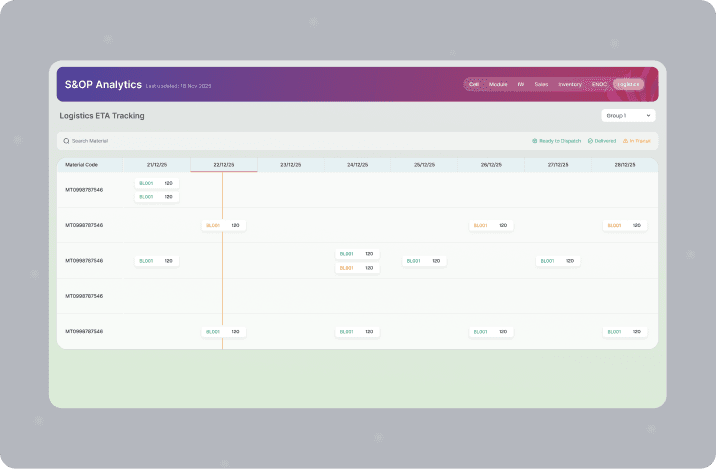
Logistics
Tracking dispatch, delivery timelines, stocks units
and material movement.
Inventory
Managing stock levels, boxes, coverage, and future risk projections.
Key Challenges
Presenting high-density data without overwhelming users
Balancing multiple KPIs such as Plan vs Actual vs Budget
Designing for multiple stakeholders (operations, planners)
Enabling quick pattern recognition across trends and metrics
Introducing forward-looking insights (e.g., inventory risk)
Ensuring consistency and usability across multiple modules
Design Approach

Structured Information Layout
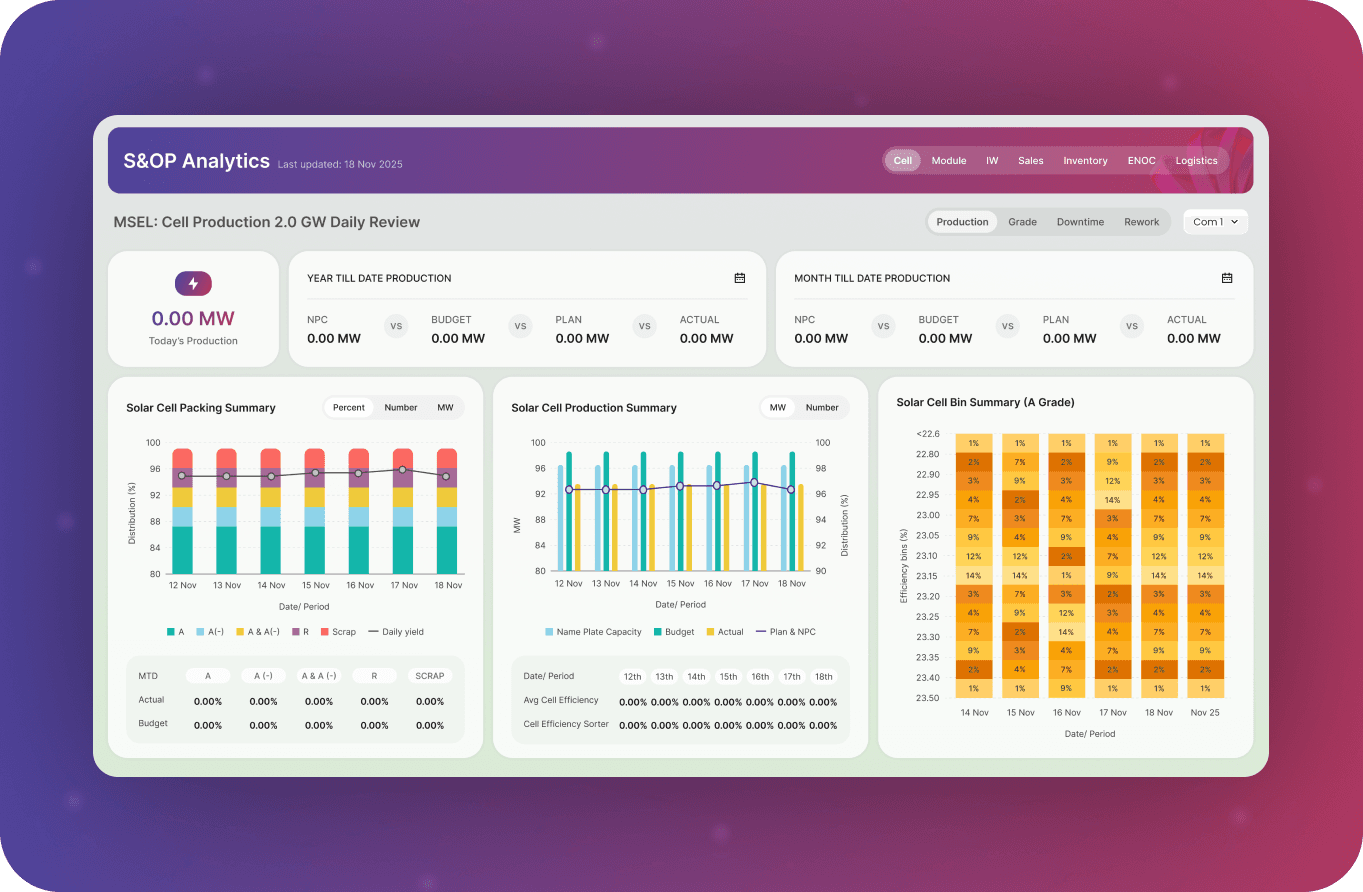
Information was organized using a balanced, card-based layout that allows users to quickly scan key metrics, trends, and detailed insights in parallel.
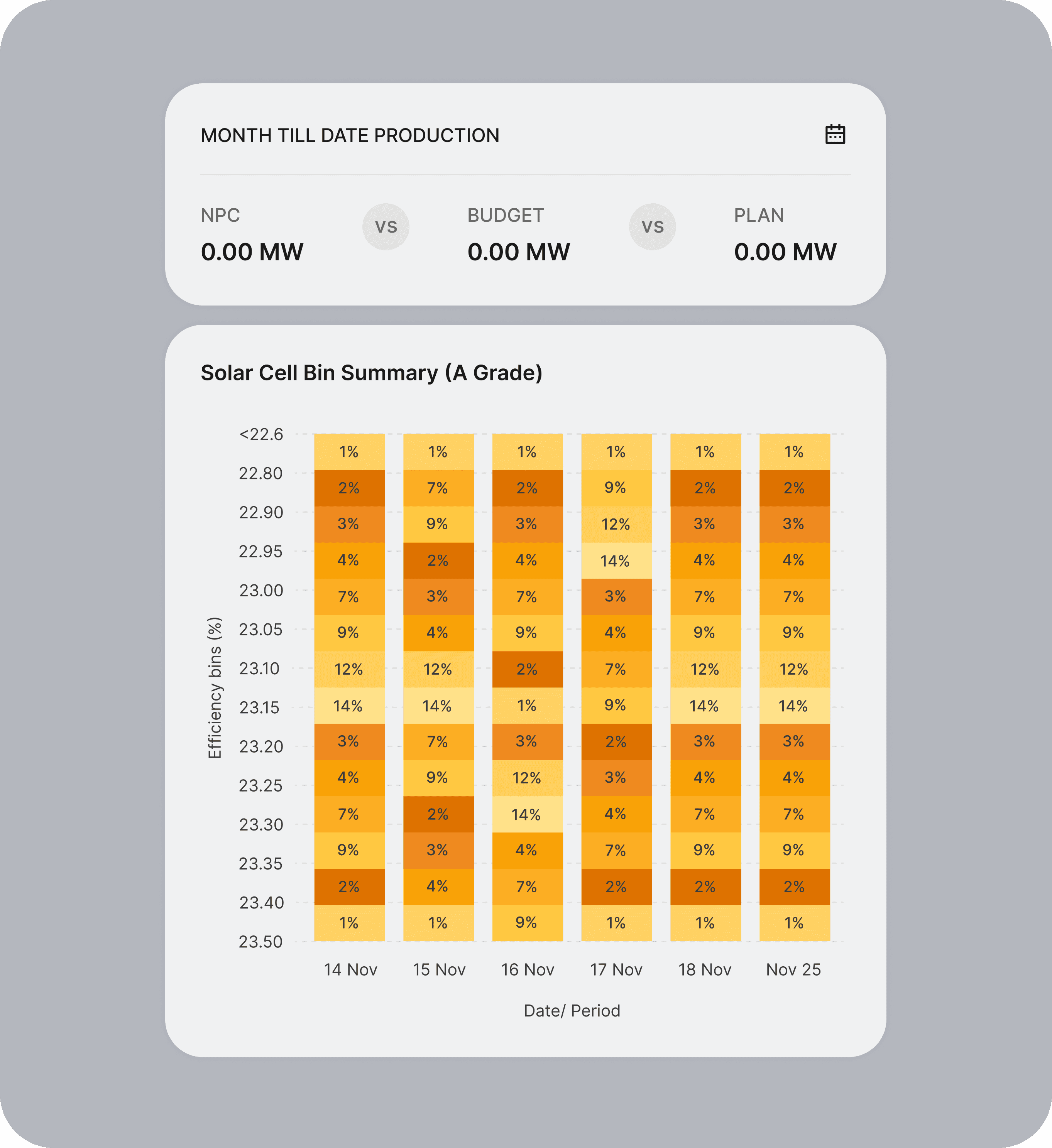
Top section
High-level KPIs and production summaries
Main grid
Comparative charts and performance trends
Supporting sections
Their Detailed breakdowns and distributions

Multi-Layer Data Visualization
Different visualization methods were used based on data type:
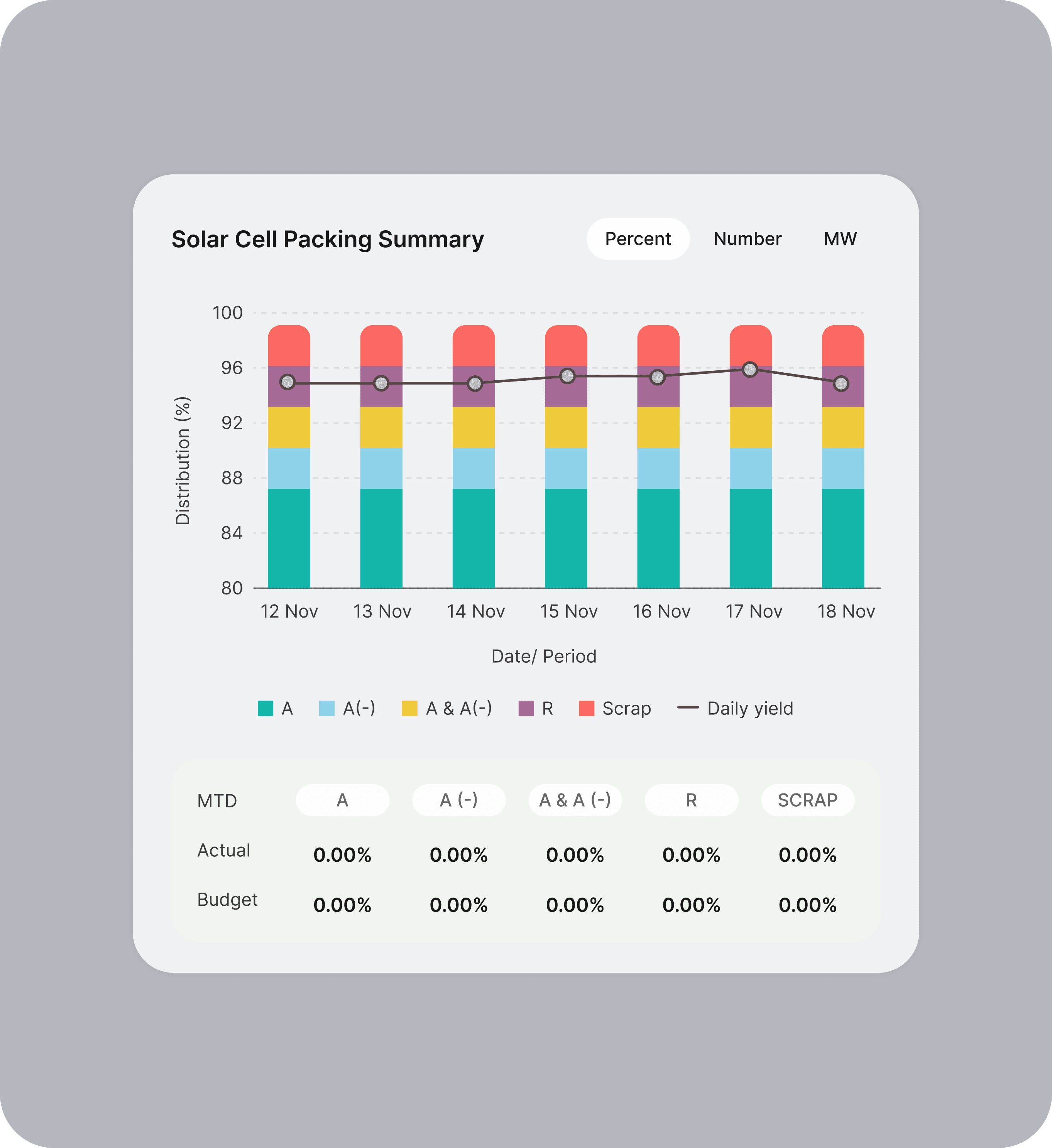
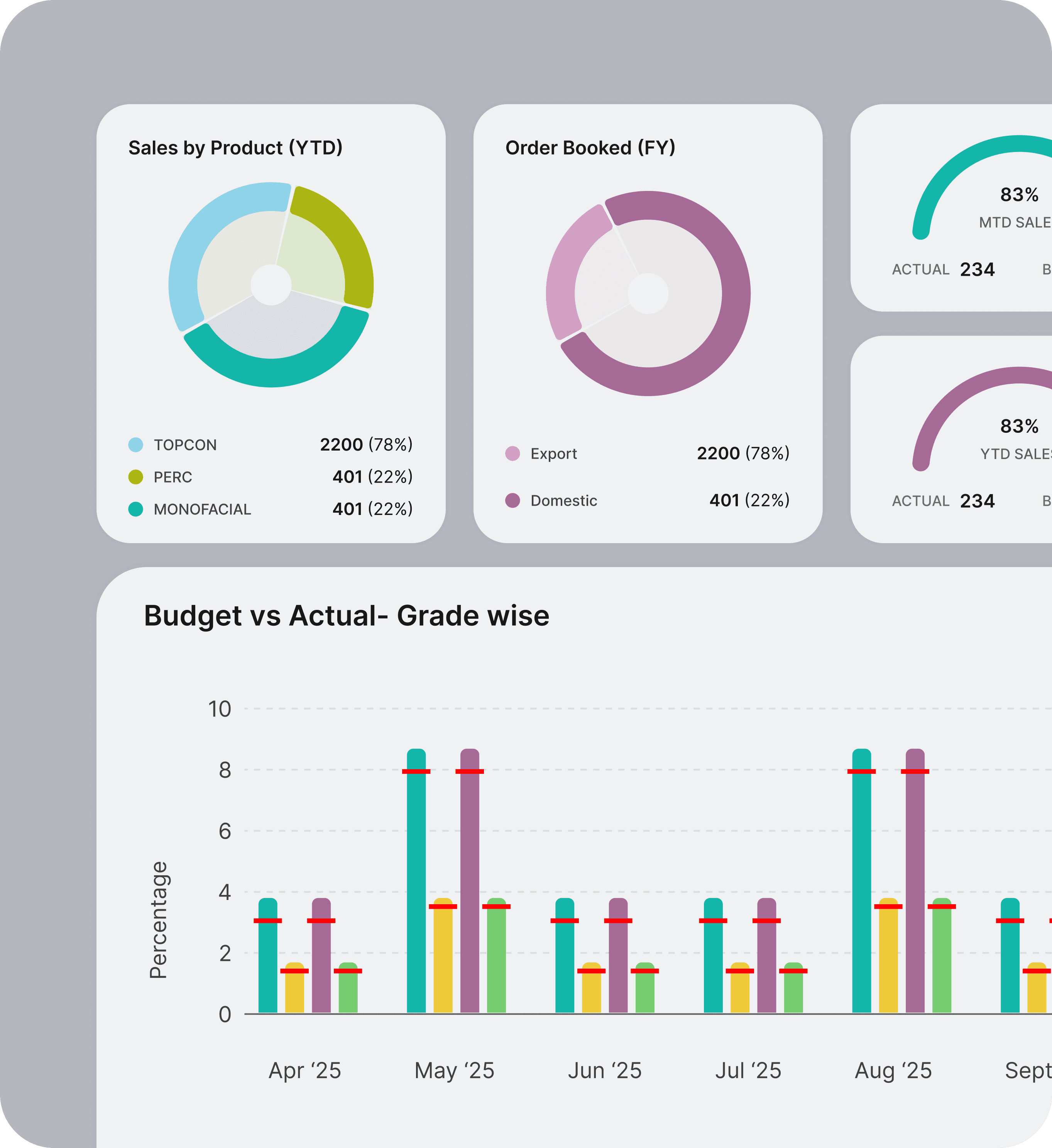
Stacked bar charts
Composition (e.g., grade distribution)
Line
charts
Trends over time (e.g., yield, efficiency)
Heatmaps
Distribution & performance variation acc to values
Data
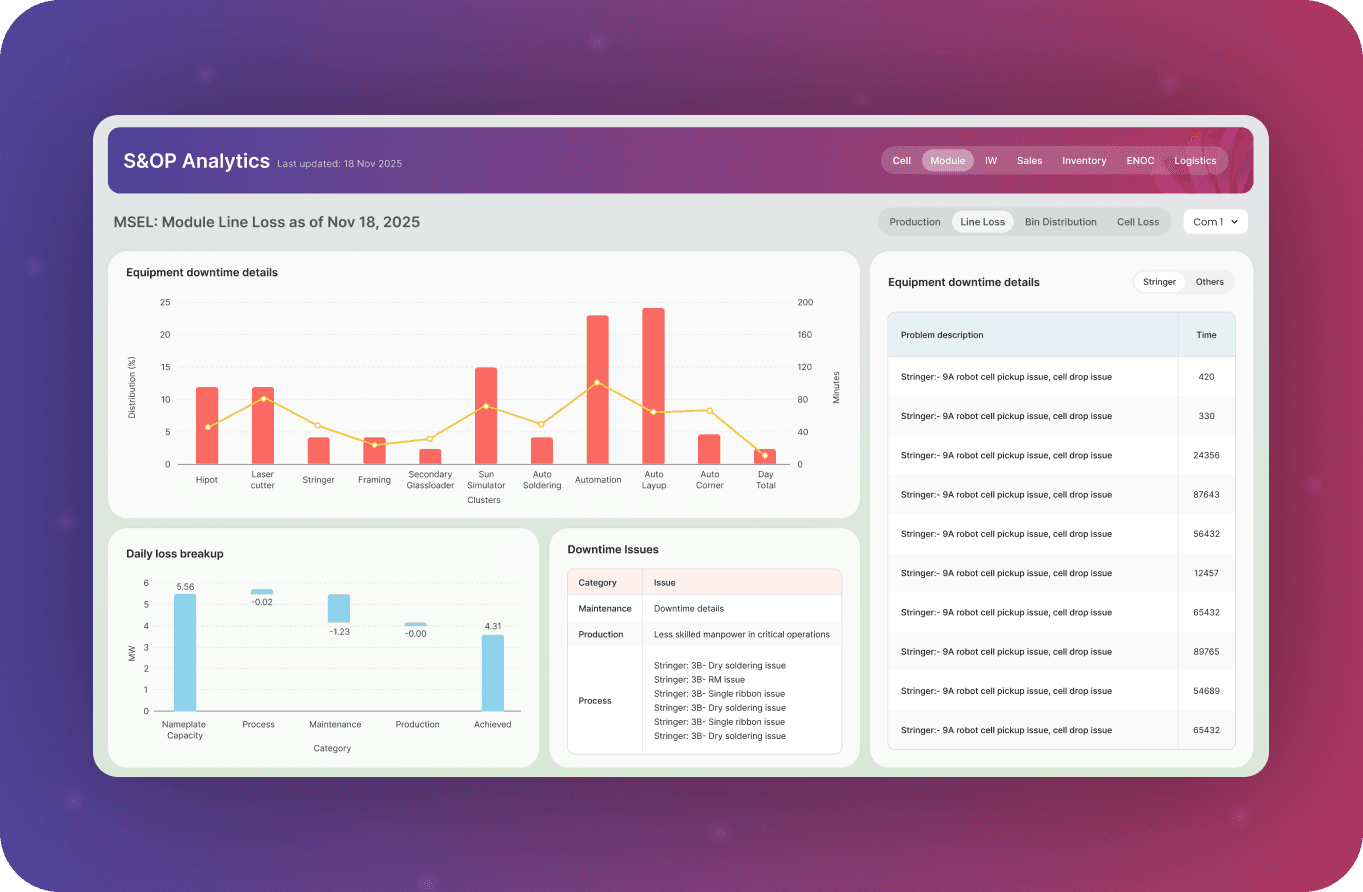
Tables
Detailed operational & efficiency data

Decision-Oriented Design
The interface was designed to support decisions, not just display data:
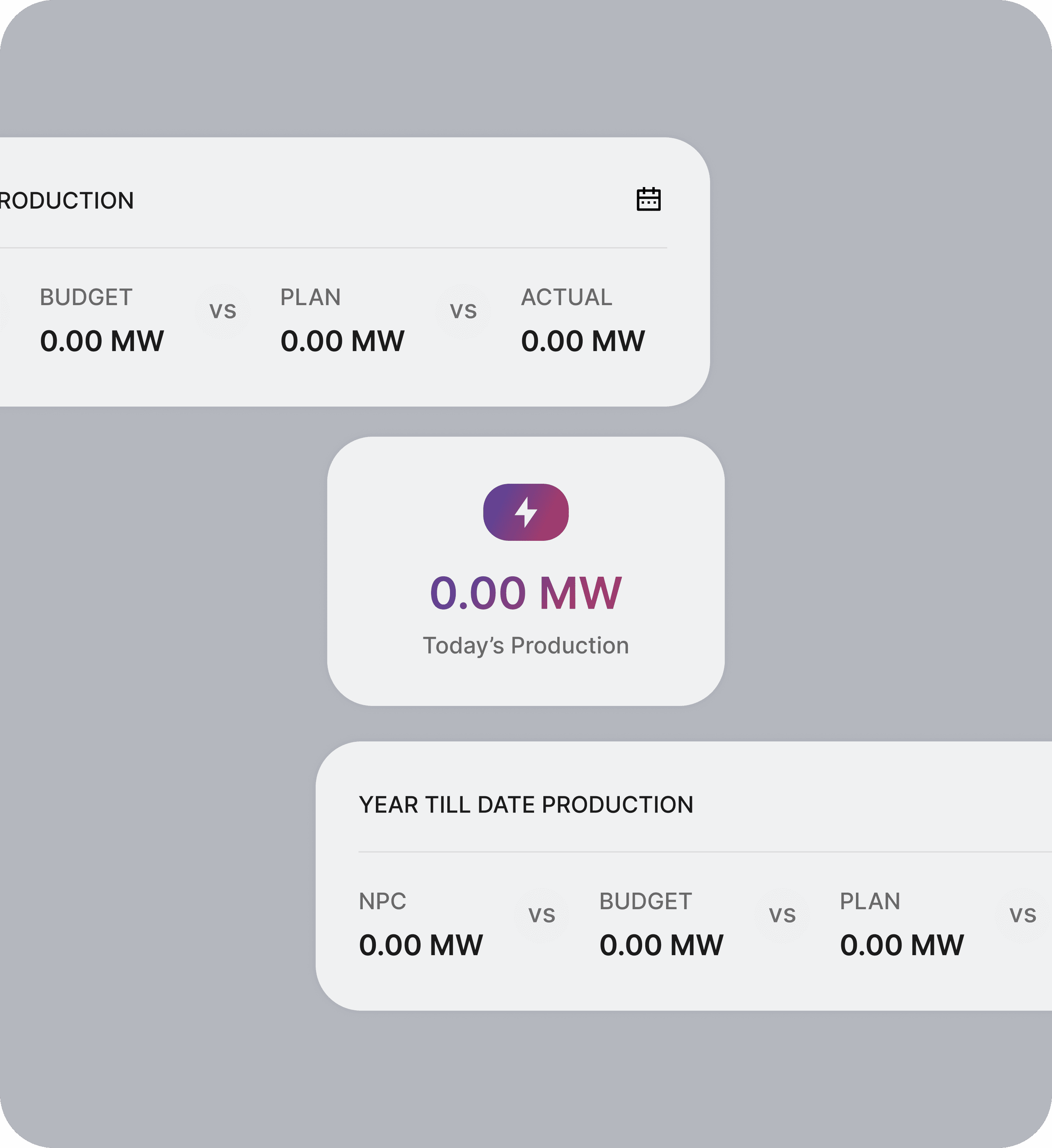
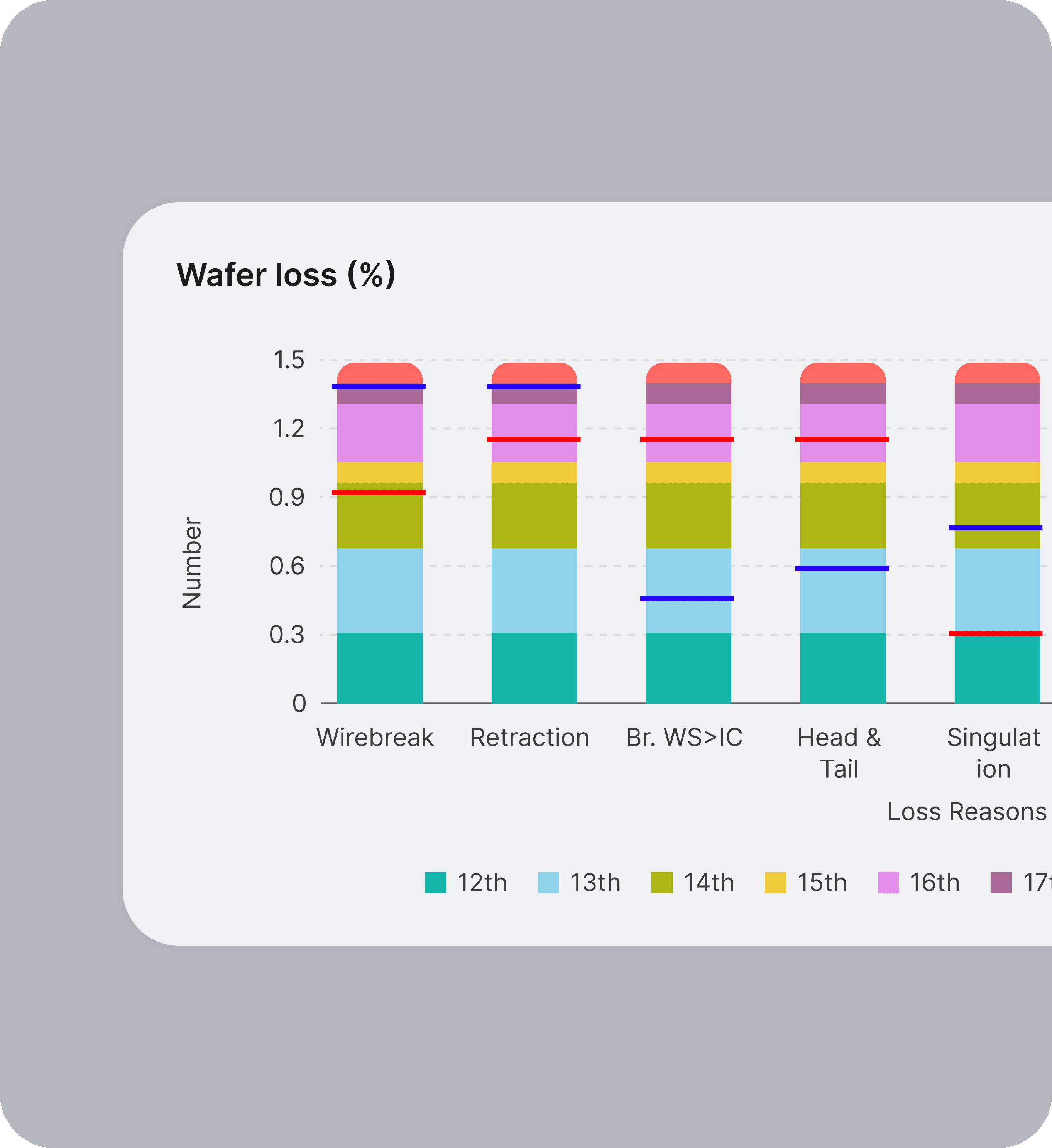
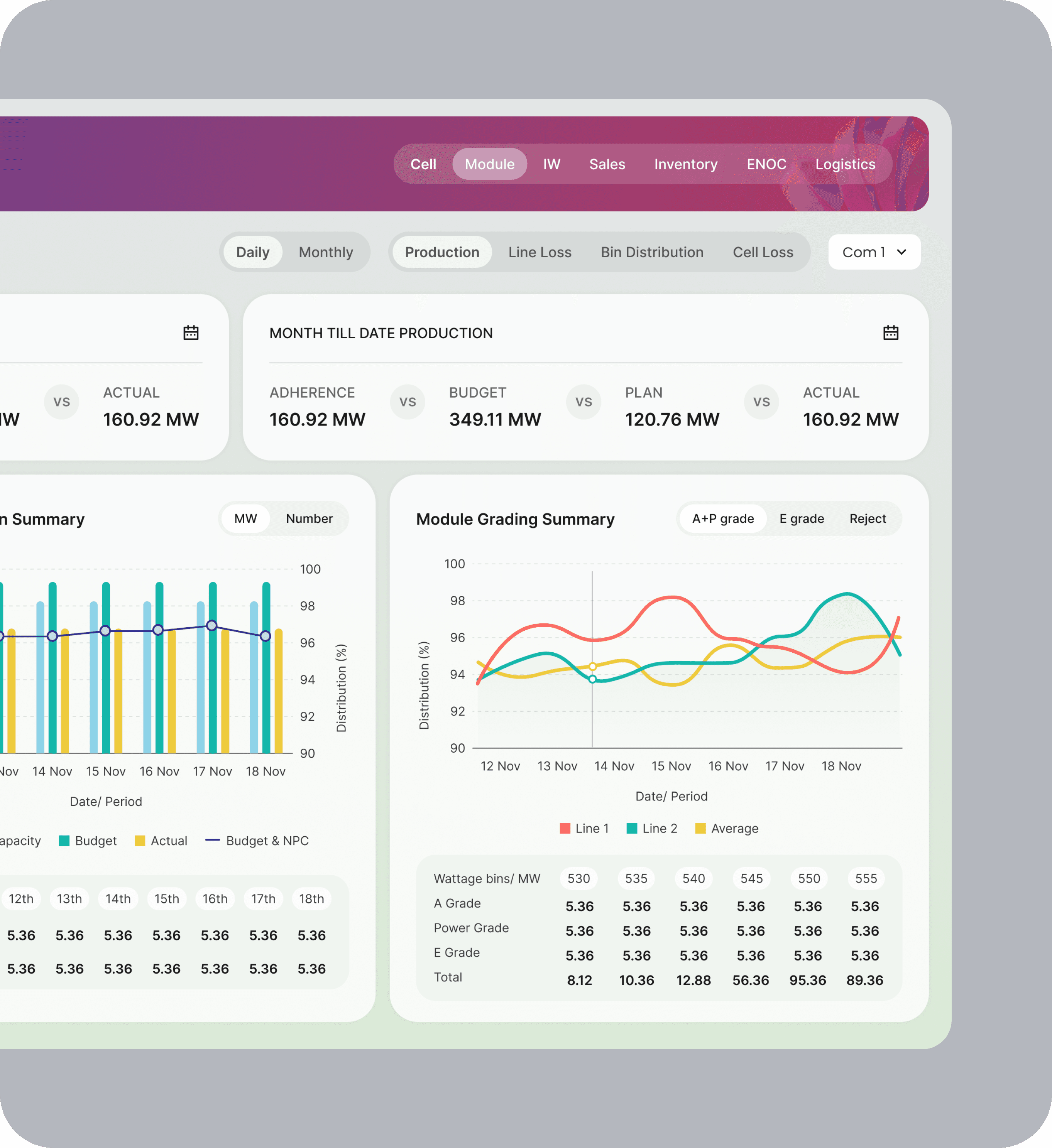
Clear comparison of Plan vs Actual vs Budget
Surfacing operational & functional risks early
Highlighting the deviations and performance gaps

Modular Navigation System
The system was divided into clear modules:
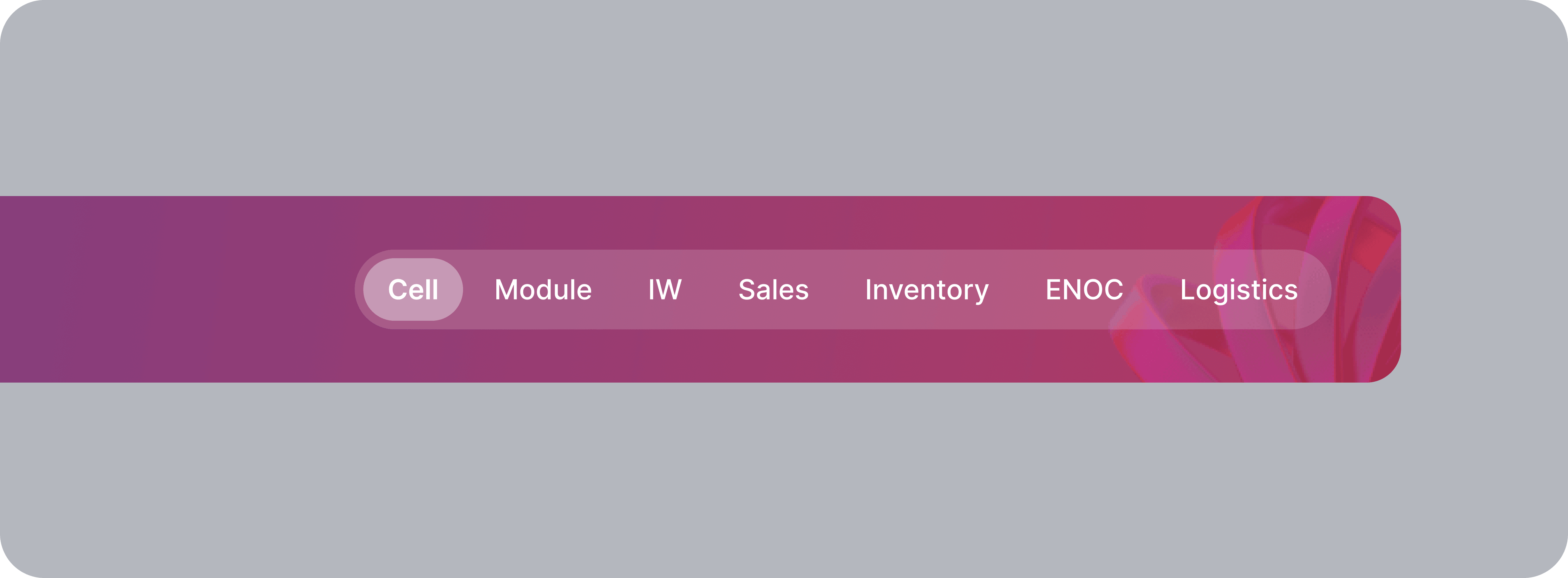
The system was divided into clear modules:
Production (Cell / Module / Wafer)
Sales
Inventory
Logistics

The Solution
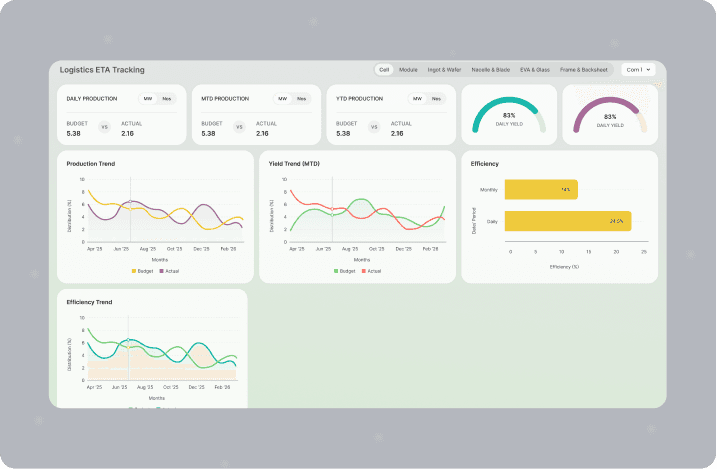
Production Intelligence Dashboard
Provides real-time visibility into manufacturing performance.
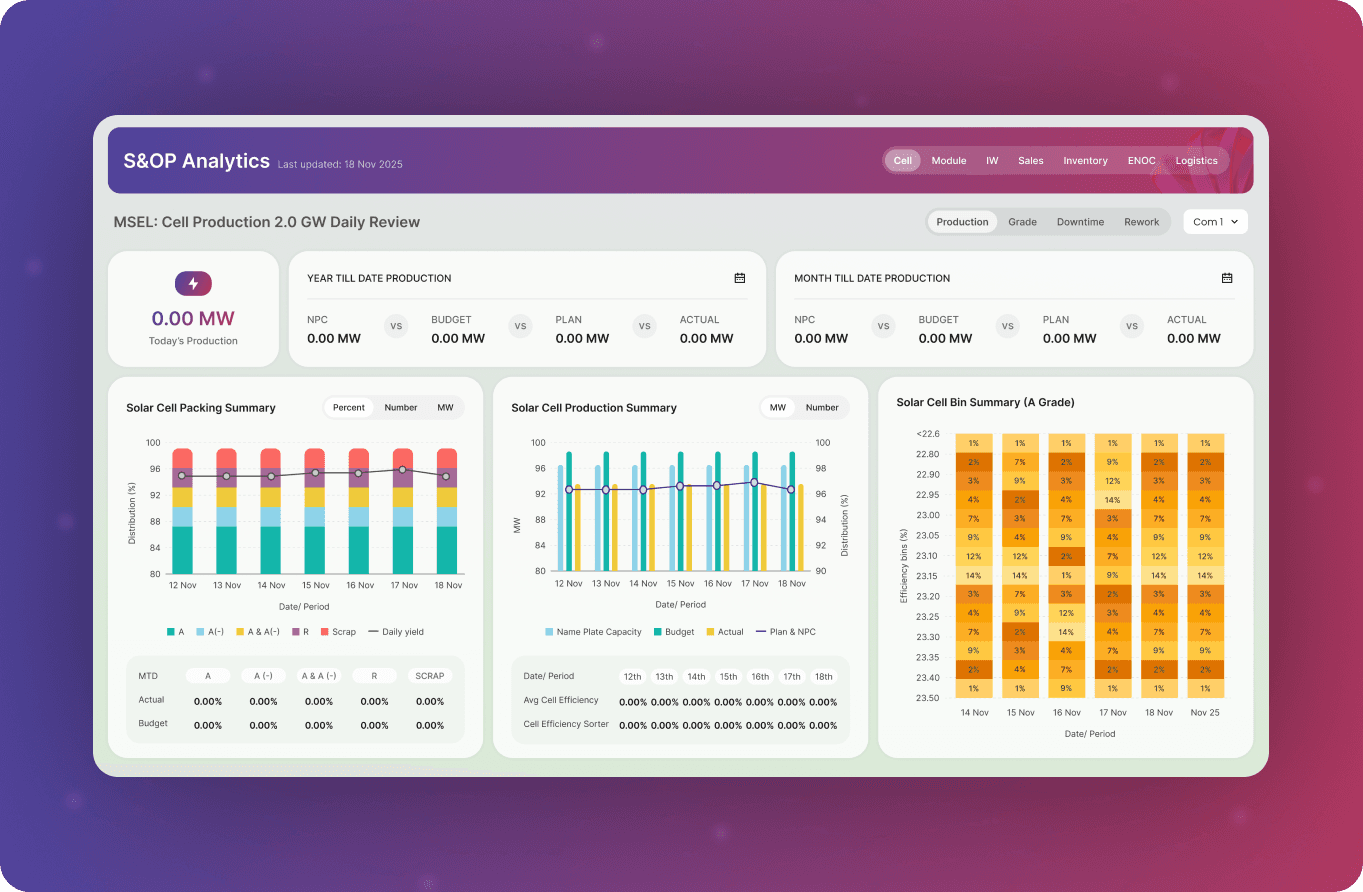
Helps teams answer:
“Are we producing efficiently and meeting targets?”
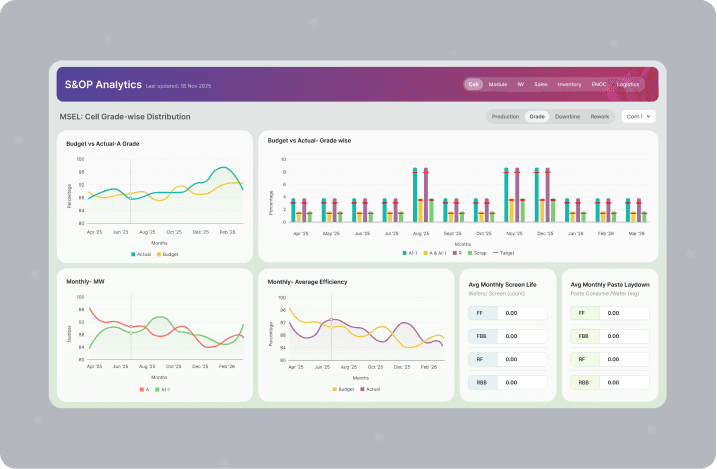
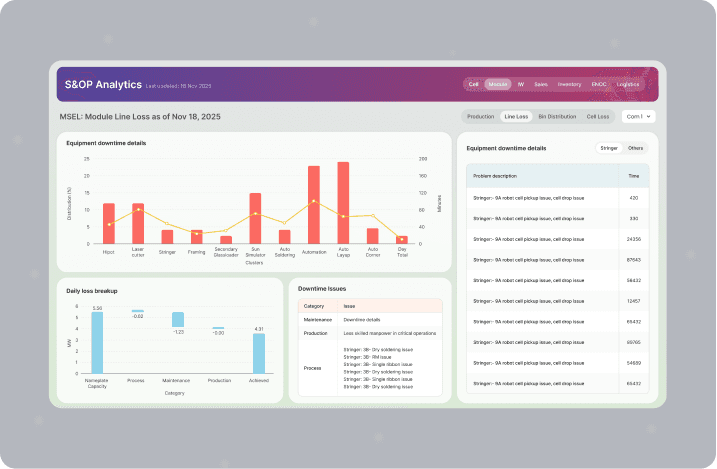
Key Features:
Daily, monthly, and yearly production tracking
Plan vs Actual vs Capacity comparison
Yield and efficiency monitoring
Grade-wise production breakdown
Sales & Demand Alignment
Bridges the gap between production and market demand.
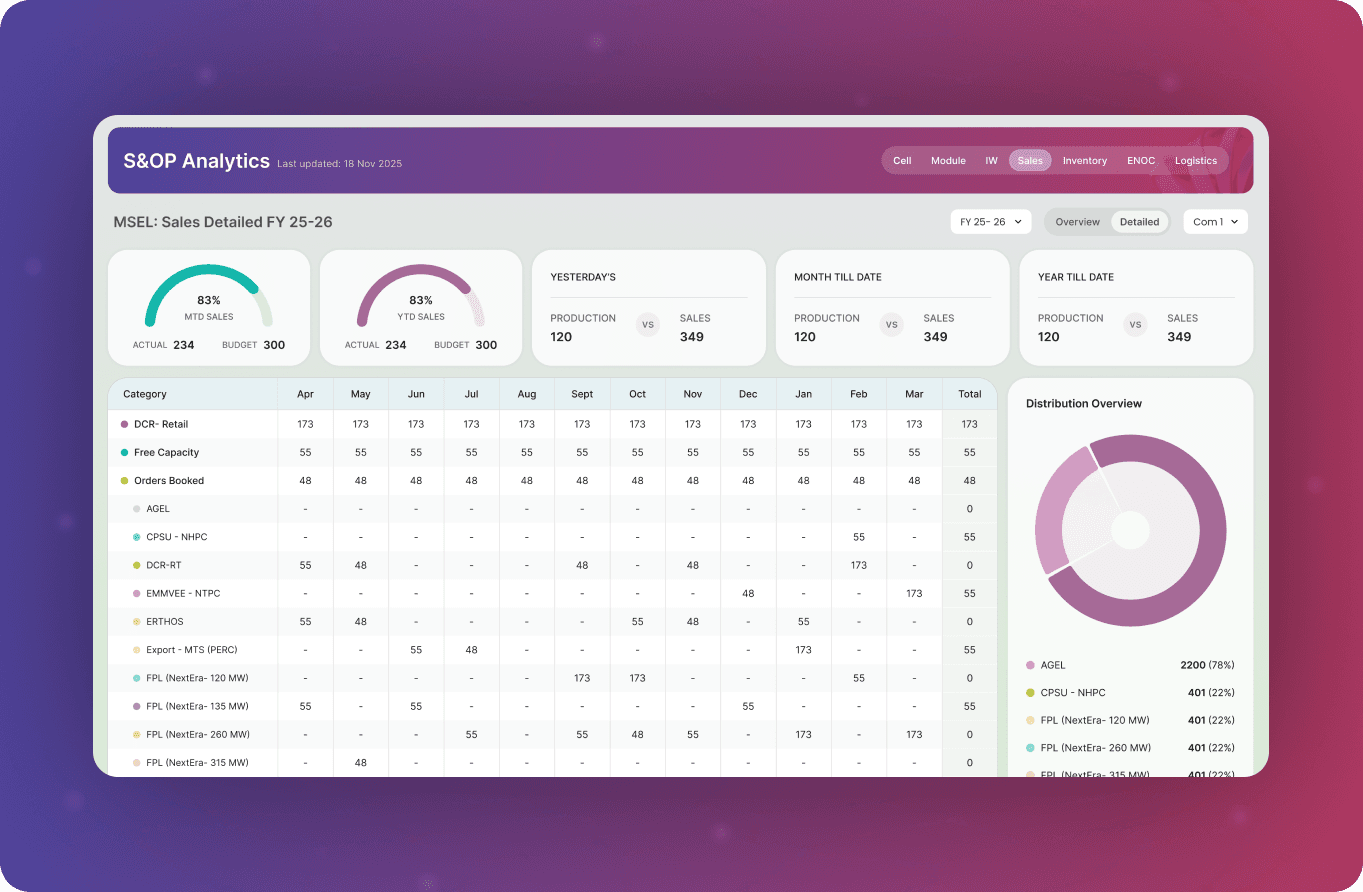
Helps teams answer:
“Are we producing the right products for demand?”
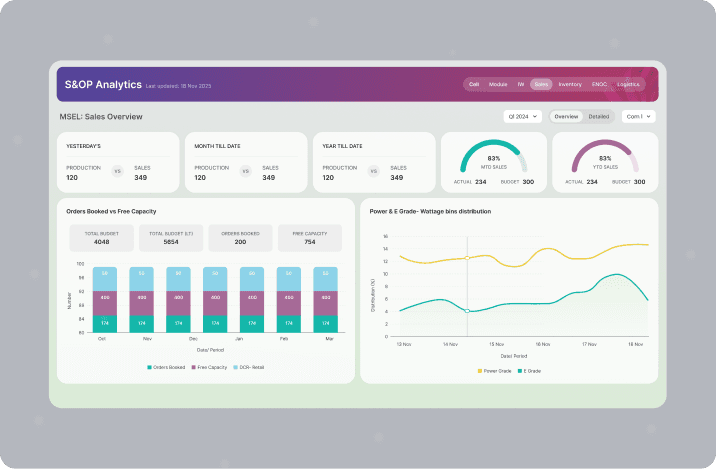
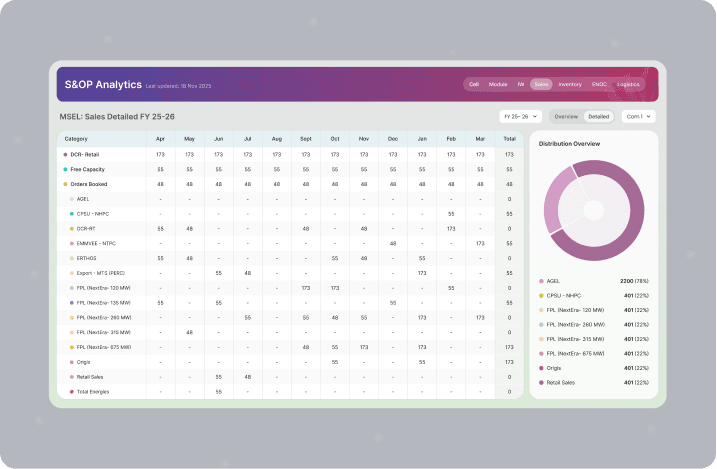
Key Features:
Production vs Sales comparison (MTD / YTD)
Orders booked vs available capacity
Product mix analysis
Domestic vs export distribution
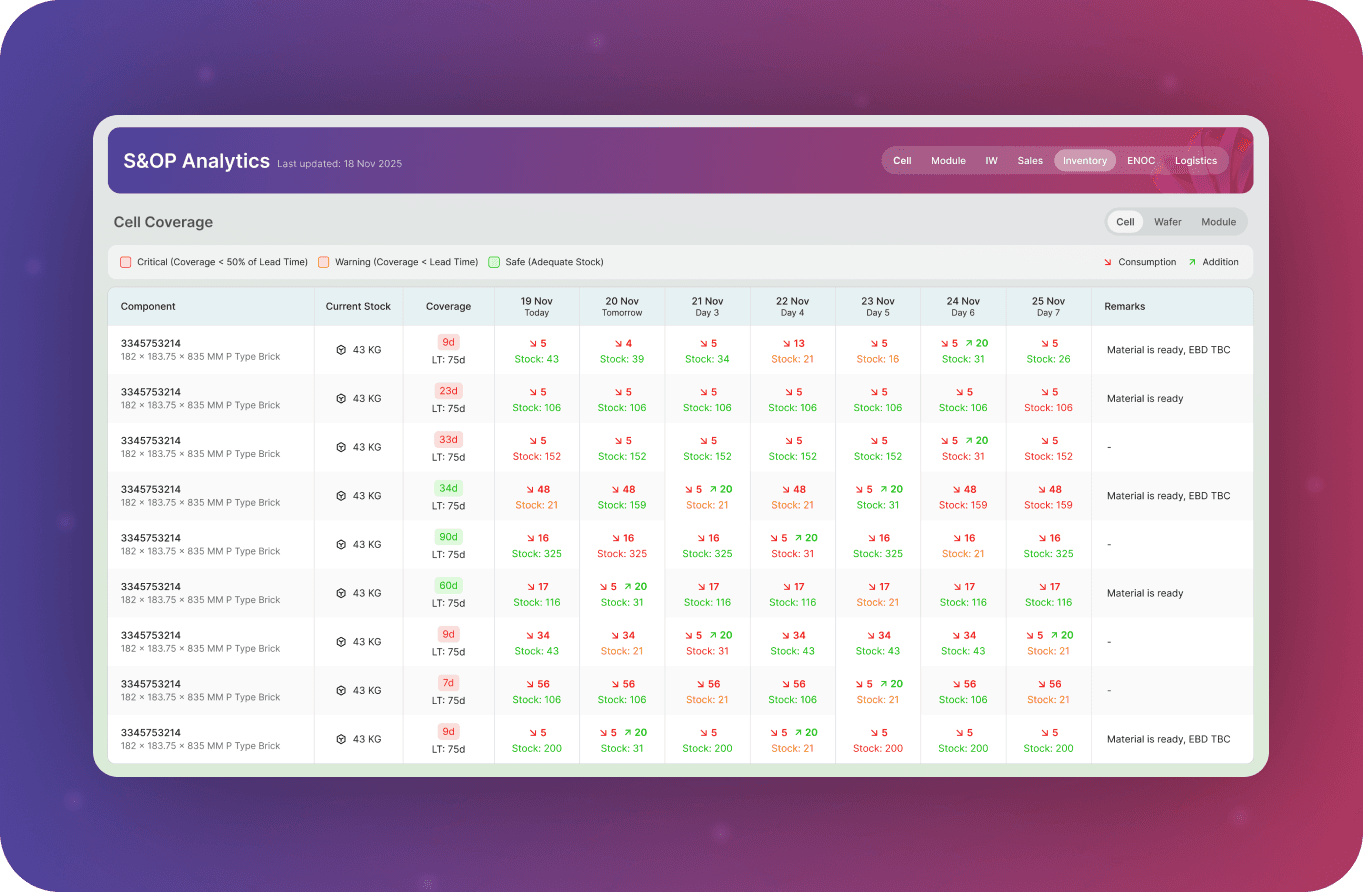
Inventory Intelligence System
Introduces predictive visibility into stock health.
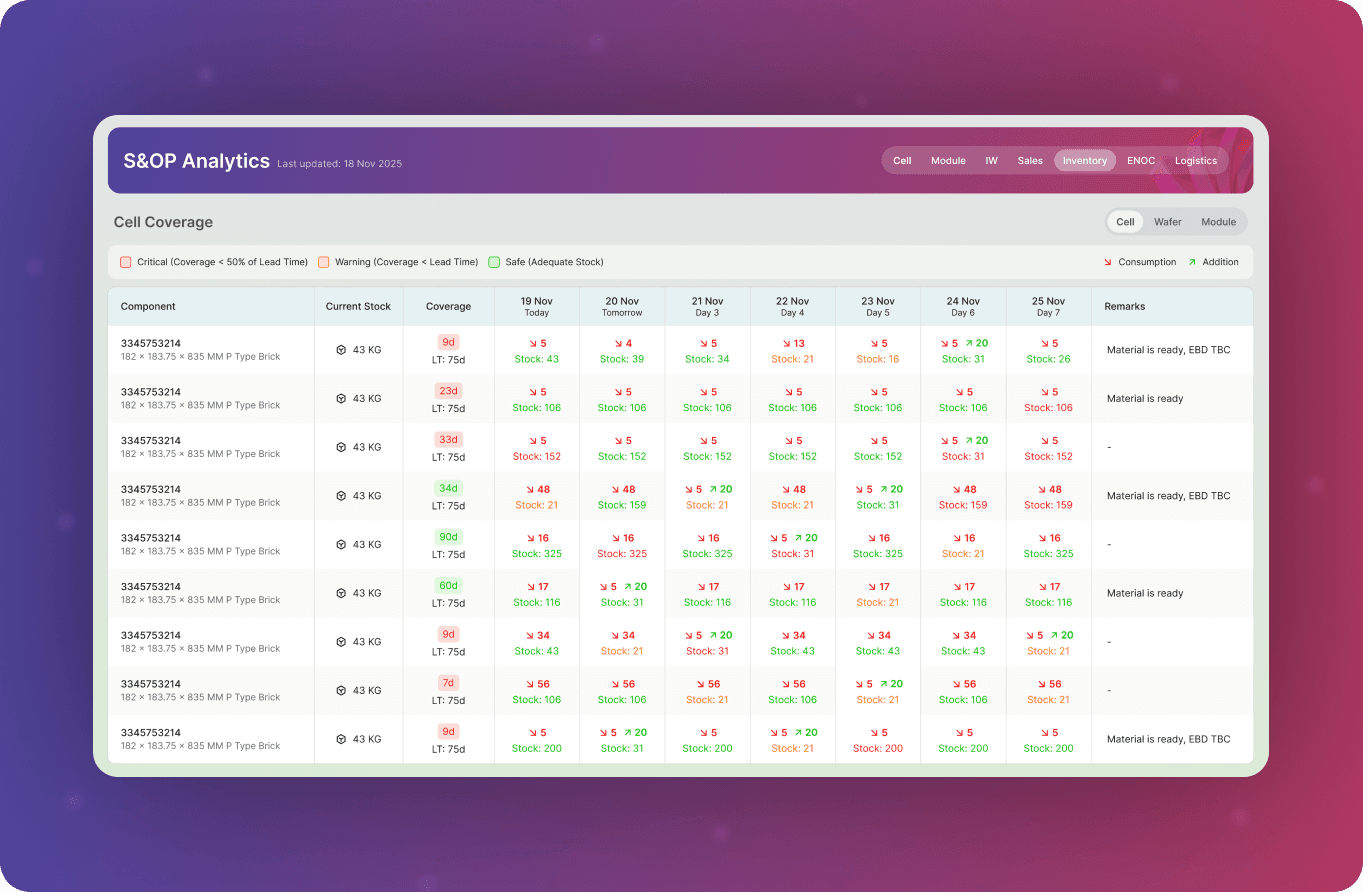
Helps teams answer:
“When will we run out of stock, and where is the risk?”
Key Features:
Inventory coverage (in days)
Color-coded risk indicators (Critical / Warning / Safe)
Forward-looking projections (multi-day view)
Stock vs consumption tracking
Before vs After
Before
After
Fragmented tools
Unified analytics platform
Static reports
Real-time monitoring
Reactive decisions
Proactive planning
Limited visibility
End-to-end operational insights
Impact Created
The platform enabled:
✅ Faster decision-making across operations
✅ Improved visibility across production, sales, and supply chain
✅ Better alignment between manufacturing output and demand
✅ Early identification of inventory and operational risks
✅ Reduced dependency on manual reporting
Key learnings
Designing for complex systems requires simplifying without losing depth
Data alone is not useful, context and comparison create insights
Predictive visibility (future risk) is more valuable than static reporting
Disclaimer
This project was designed for a confidential enterprise client in the renewable energy sector. All data, visuals, and identifiers have been modified to maintain confidentiality.